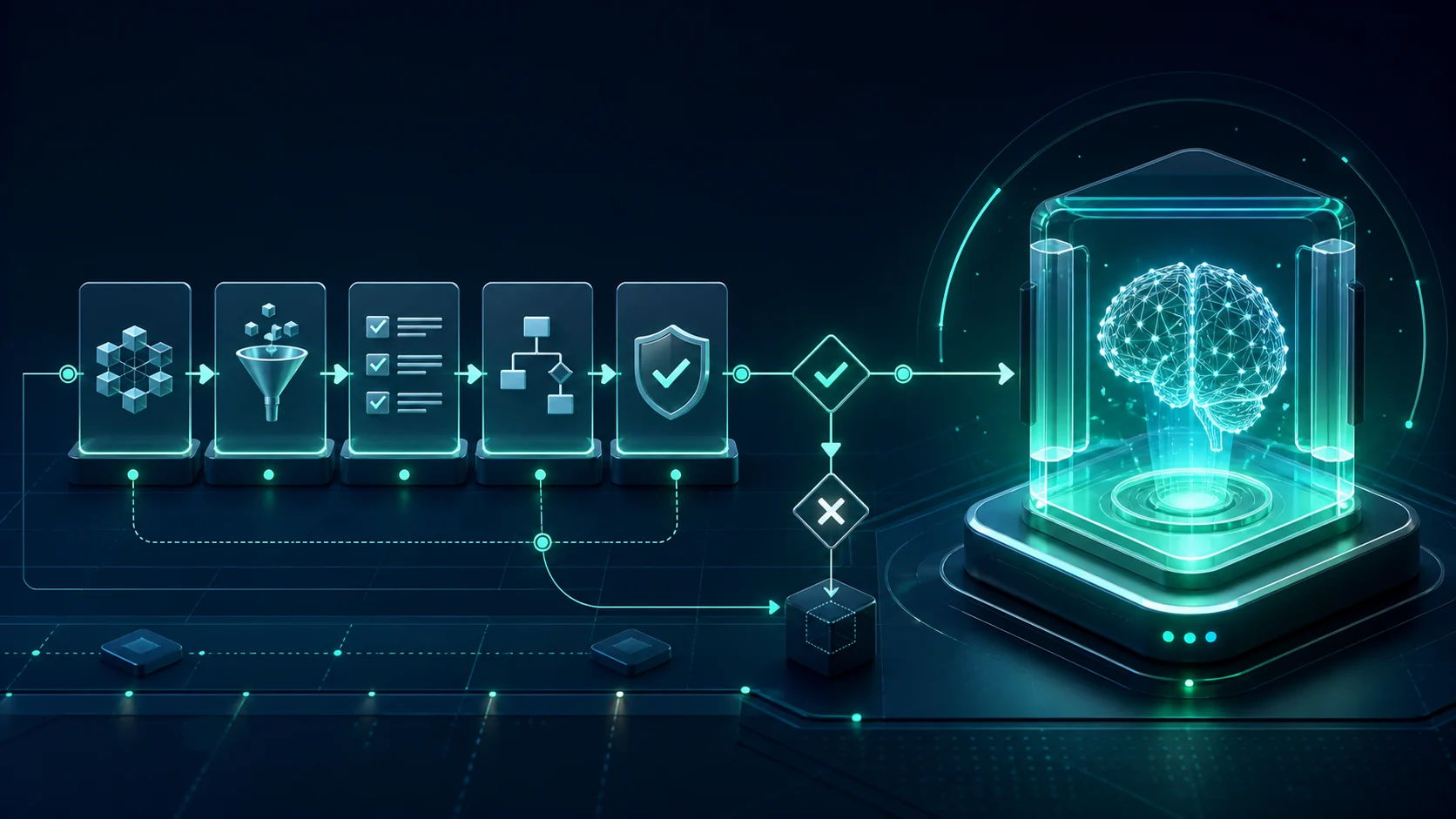
Many teams begin an AI project by choosing a tool. A stronger starting point is the workflow itself: what enters the process, which decisions are made, who owns each decision, and what a reliable result looks like.
Automation amplifies the system around it. If source data is incomplete, responsibilities overlap, or exceptions live only in one person’s memory, adding AI can produce faster inconsistency rather than dependable improvement.
Map the current process before introducing a model. Identify repeatable inputs, sensitive information, approval points, failure cases, and the moments where human judgment creates real value. This reveals which steps are safe to assist and which should remain explicitly accountable.
Begin with one measurable use case and a clear review loop. A focused assistant for classification, drafting, summarization, or internal search is easier to evaluate than a broad promise to automate everything.
The best AI implementation is rarely the most visible one. It is the one that removes friction while leaving the business with clearer ownership, better information, and a process people can still understand.